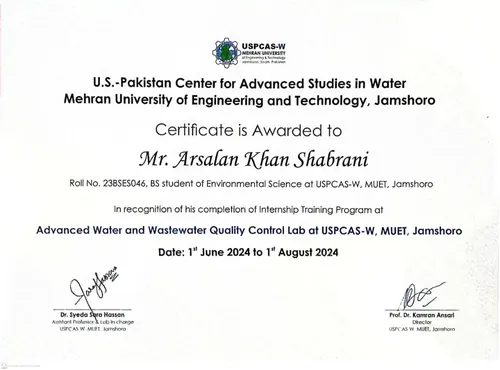
Advanced Water & Wastewater Quality Control Lab
Two-month hands-on laboratory internship focused on physicochemical testing, spectrophotometry, wastewater treatment standards, and certified analytical QA/QC protocols.
Environmental Science undergraduate working on groundwater sustainability and water security through satellite remote sensing and GIS. Prospective Master's student, Fall 2027.
I'm a final-year Environmental Science student at USPCAS-W, Mehran University of Engineering and Technology, Jamshoro, with hands-on lab experience in water and wastewater quality control and technical grounding in GIS, remote sensing, and environmental data analysis. My work centers on how satellite gravimetry and hydrological modeling can be used to track groundwater depletion and water security under climate change — using GRACE/GRACE-FO, Sentinel imagery, GIS, and Google Earth Engine.
Quantifying regional groundwater storage anomalies by integrating GRACE/GRACE-FO satellite gravimetry with GLDAS land surface model outputs.
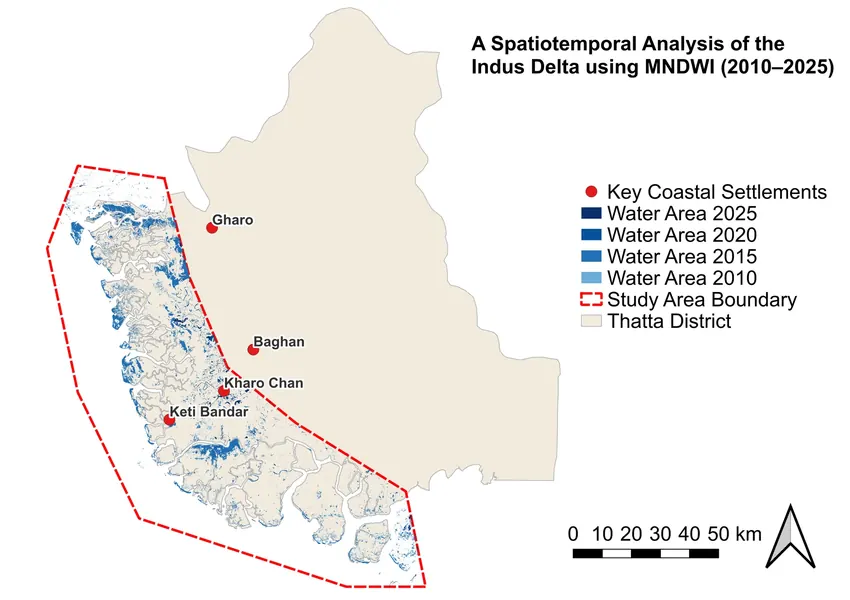
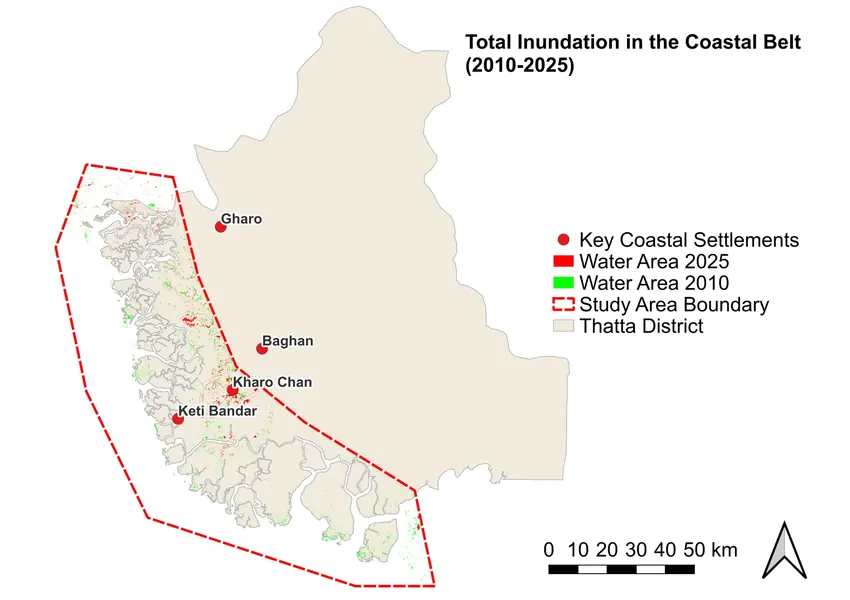
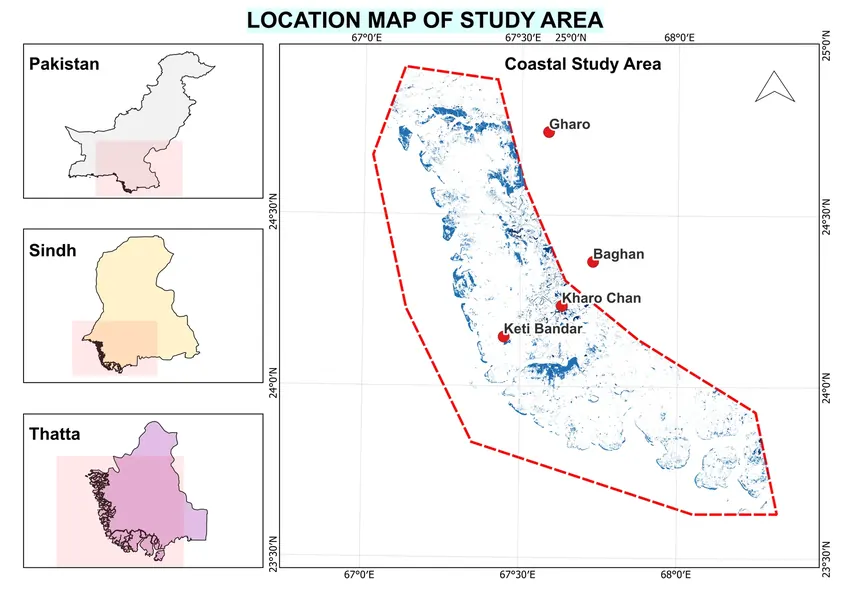
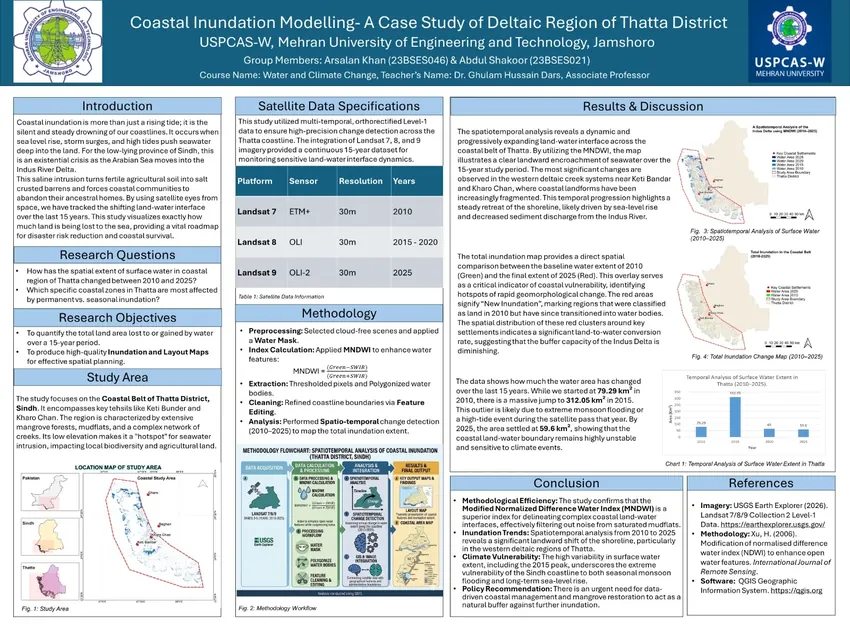
The Indus Delta along the Thatta coastline is highly susceptible to sea intrusion, deltaic subsidence, and severe storm surges caused by reduced upstream freshwater flows. This study tracks long-term shoreline migration, tidal creek dynamics, and surface inundation across the vulnerable coastal talukas of Keti Bandar and Kharo Chan over a 15-year period (2010 to 2025).
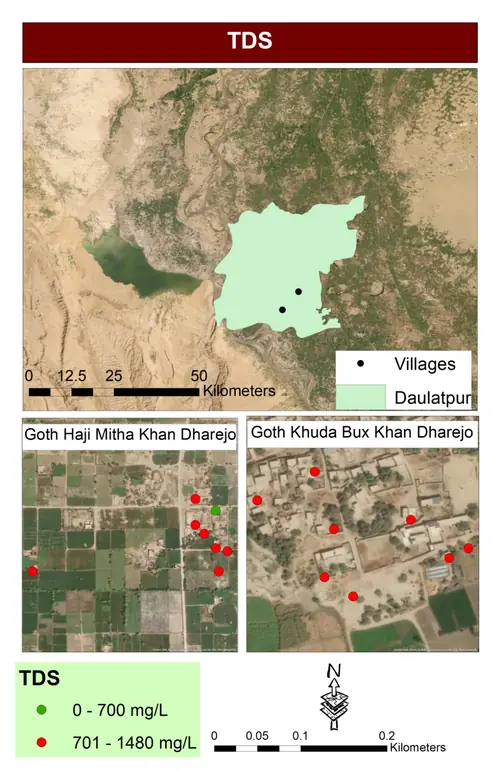
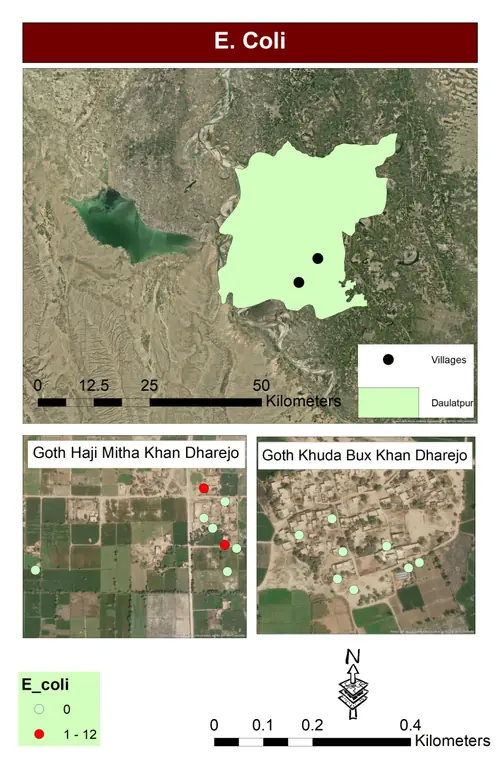
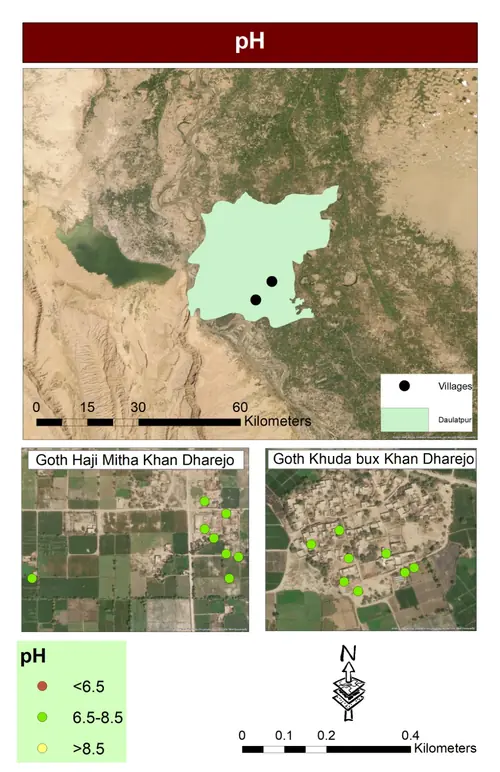
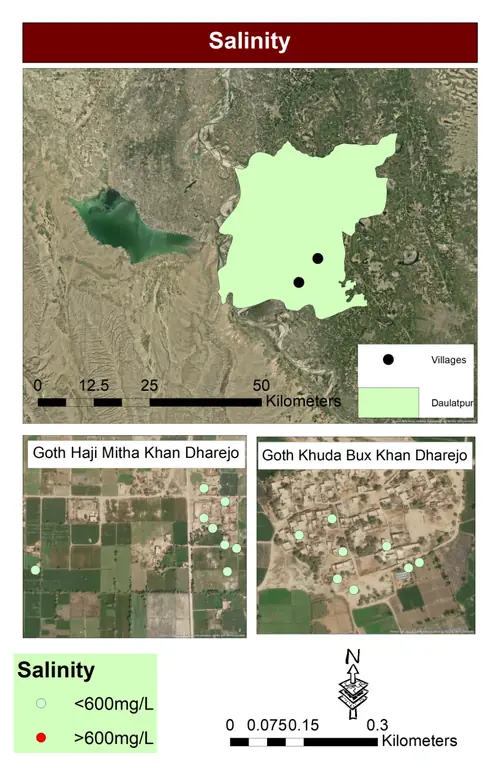
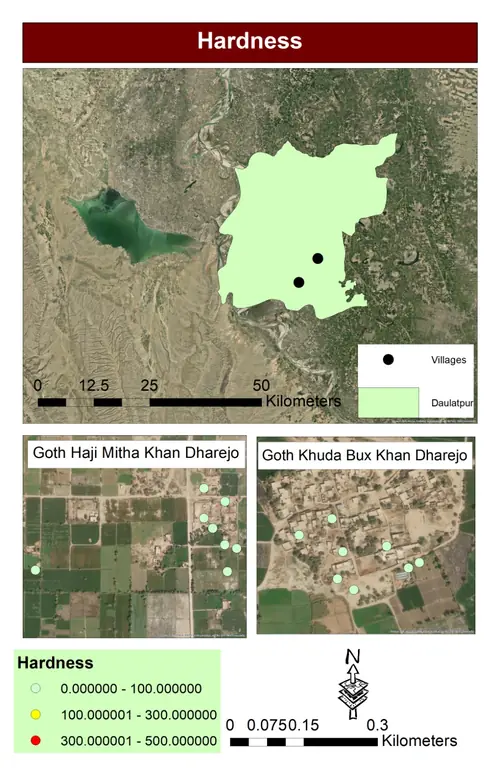
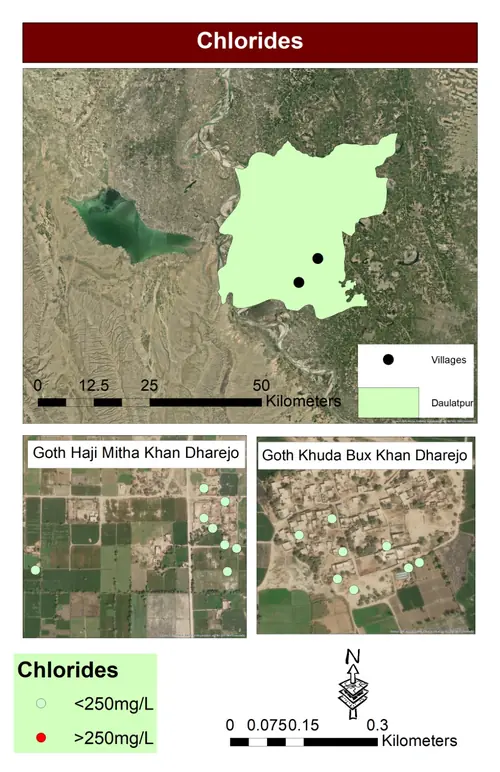
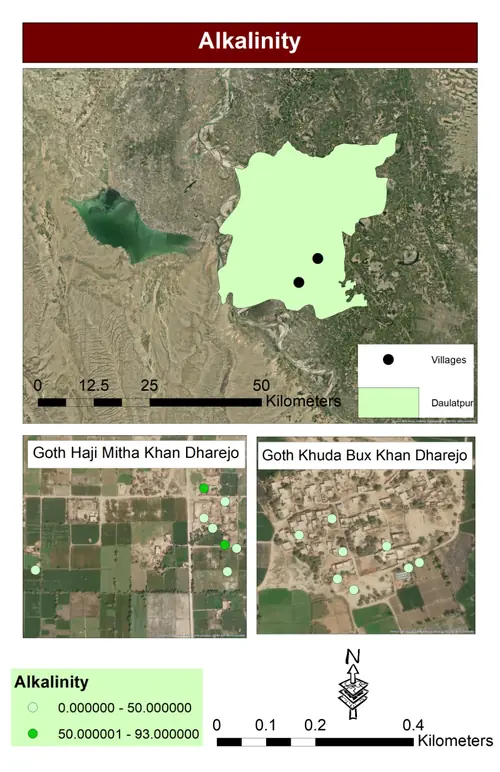
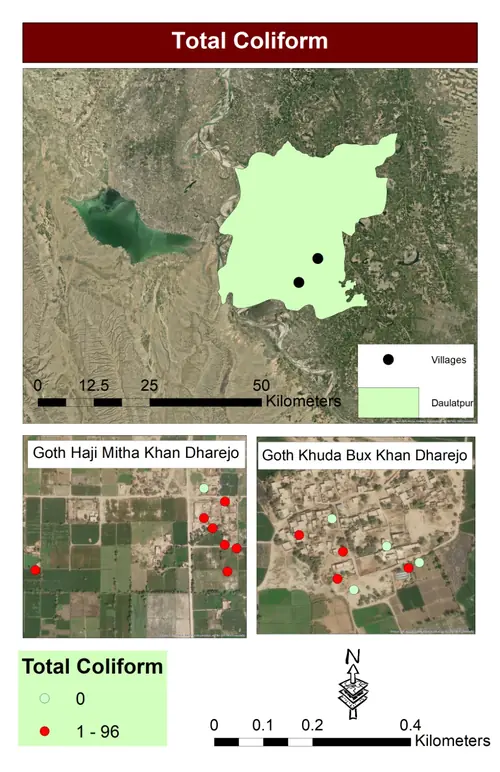
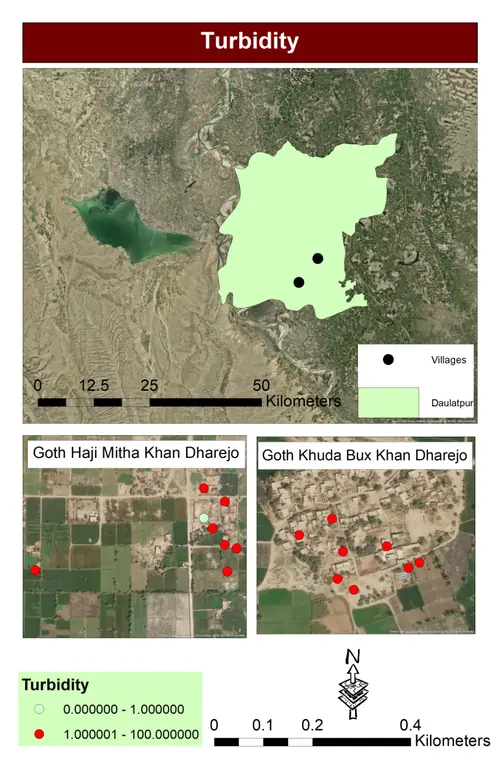
Access to safe drinking water is a critical health challenge across rural Sindh, where groundwater often contains high salinity, heavy metals, or microbial contaminants. This project performed a spatial risk assessment of drinking water quality across Goth Khuda Bux Khan Dharejo and Goth Haji Mitha Khan Dharejo, evaluating nine water quality parameters against WHO and national standards.
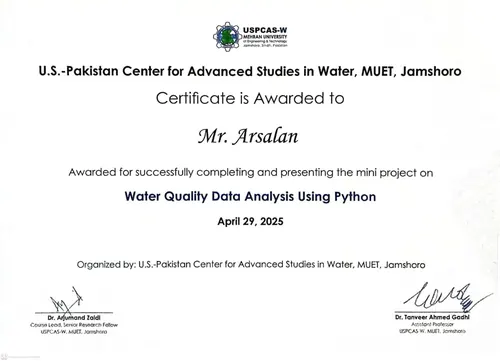
Developed data processing scripts in Python to evaluate multi-parameter laboratory water quality records, automating outlier detection and regulatory benchmark comparisons against WHO drinking water thresholds.
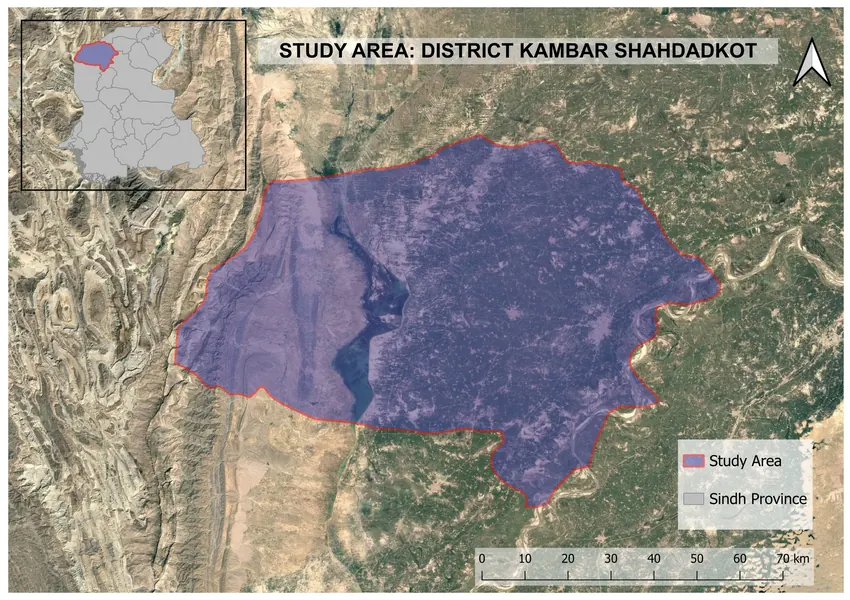
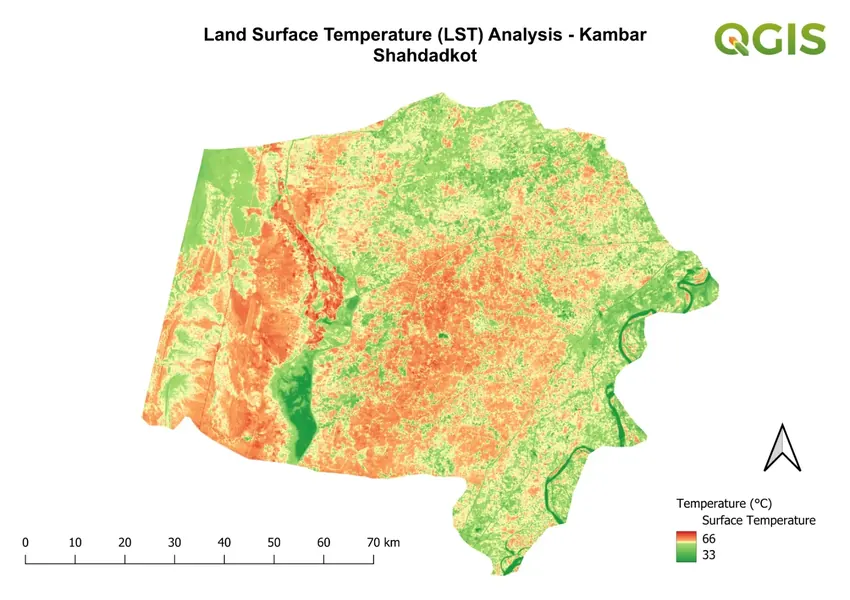
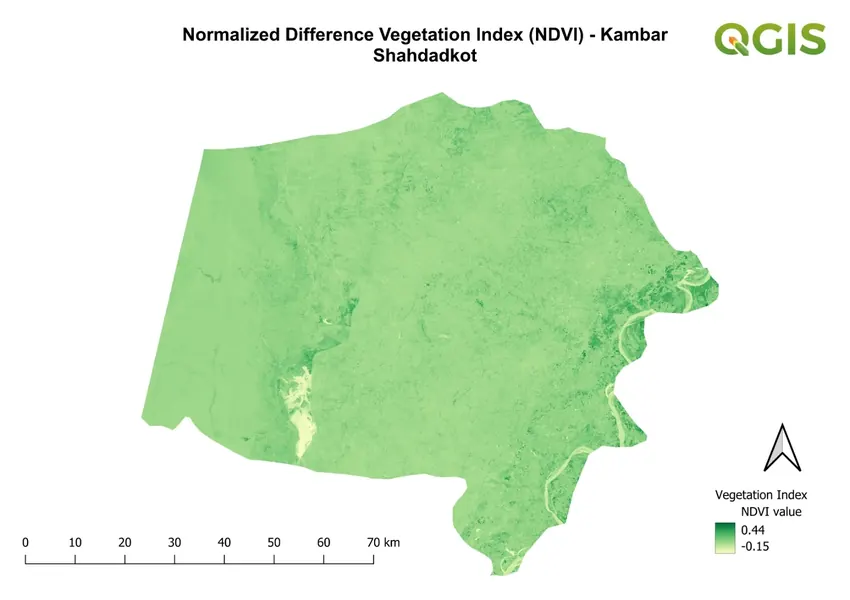
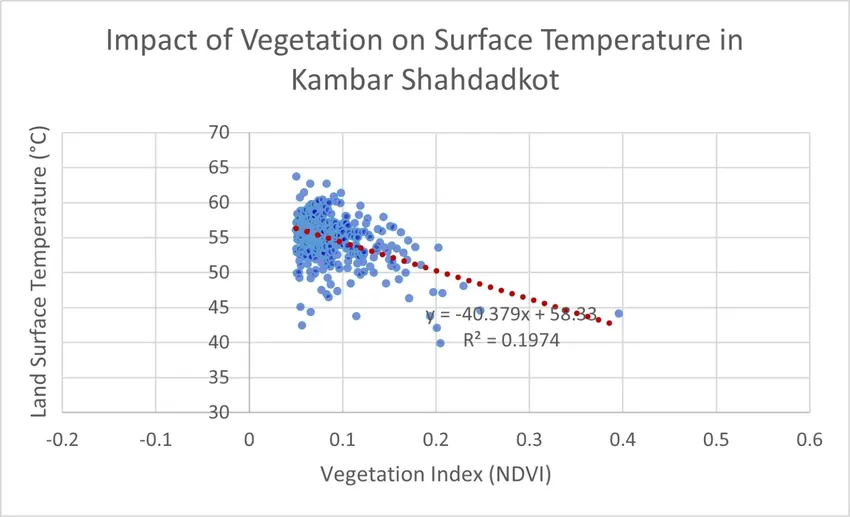
Kamber Shahdadkot regularly experiences extreme summer temperatures exceeding 48°C, yet micro-scale spatial thermal variations are seldom quantified. This project evaluates surface urban heat island (SUHI) patterns across the district by deriving absolute Land Surface Temperature (LST) and analyzing its spatial correlation with surface vegetative cover and moisture availability.
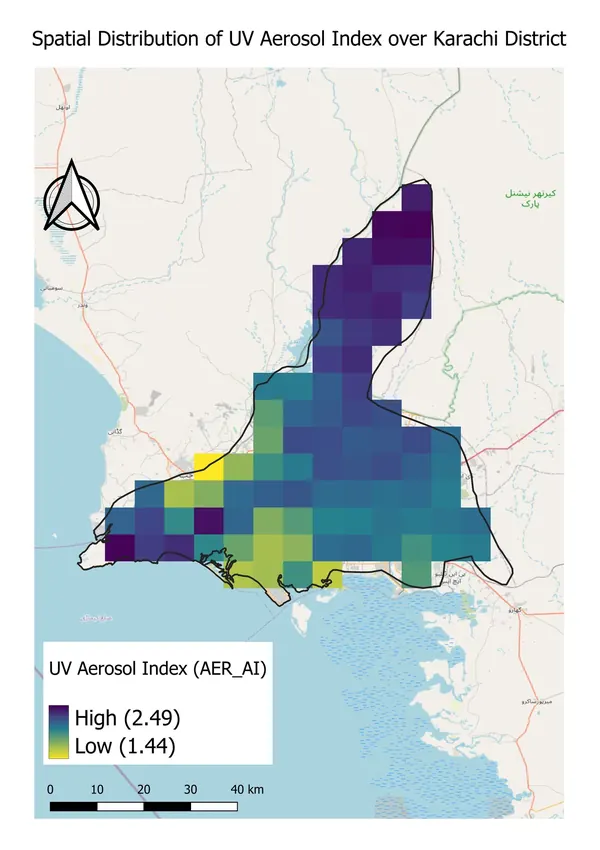
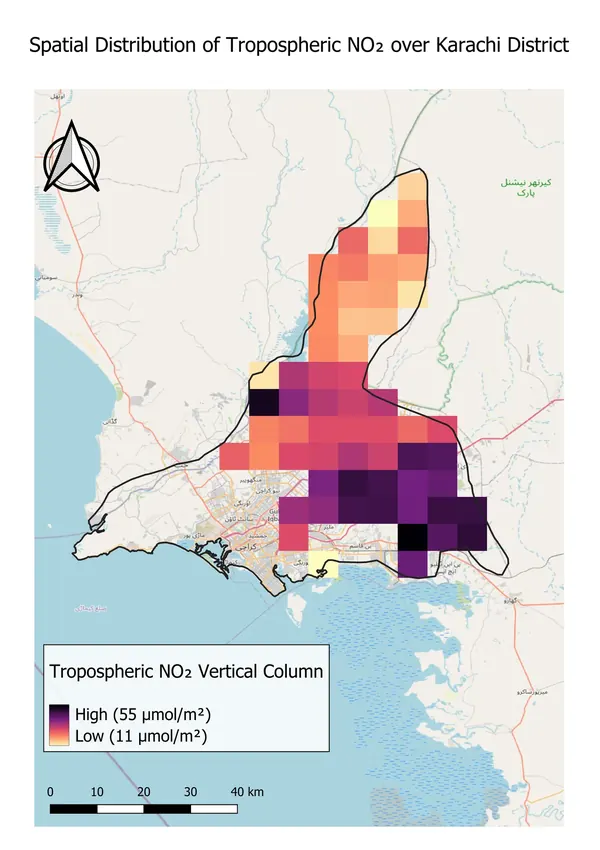
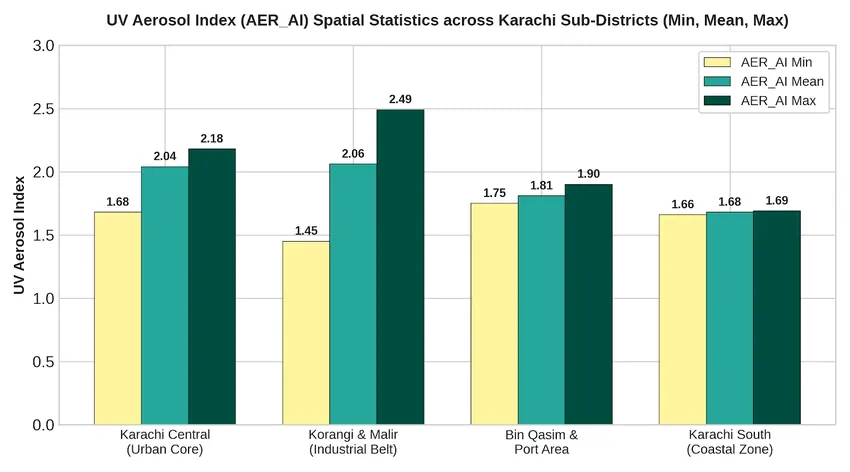
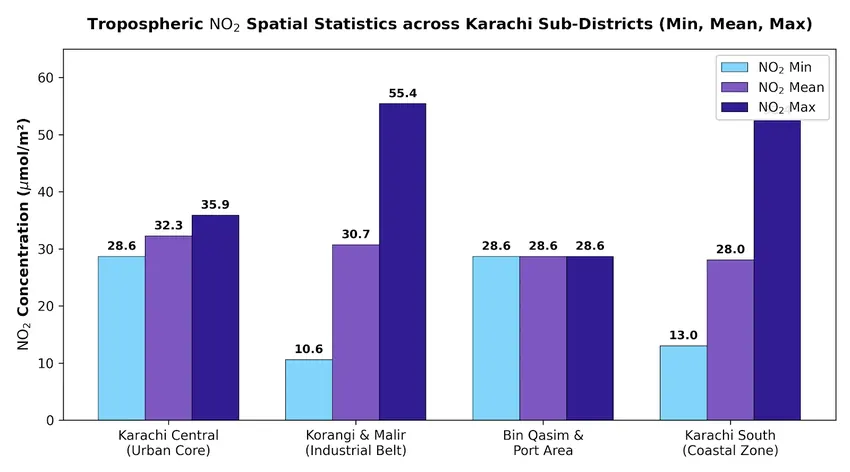
Karachi faces severe localized air pollution driven by dense vehicular corridors, port operations, and extensive manufacturing hubs. Ground monitoring stations across the metropolis remain sparse, making city-wide spatial evaluation difficult. This project evaluates the spatial distribution of two critical atmospheric pollutants—tropospheric Nitrogen Dioxide (NO₂) and the UV Absorbing Aerosol Index (AAI)—across Karachi's sub-districts to identify high-exposure clusters and assess industrial and transport contributions.
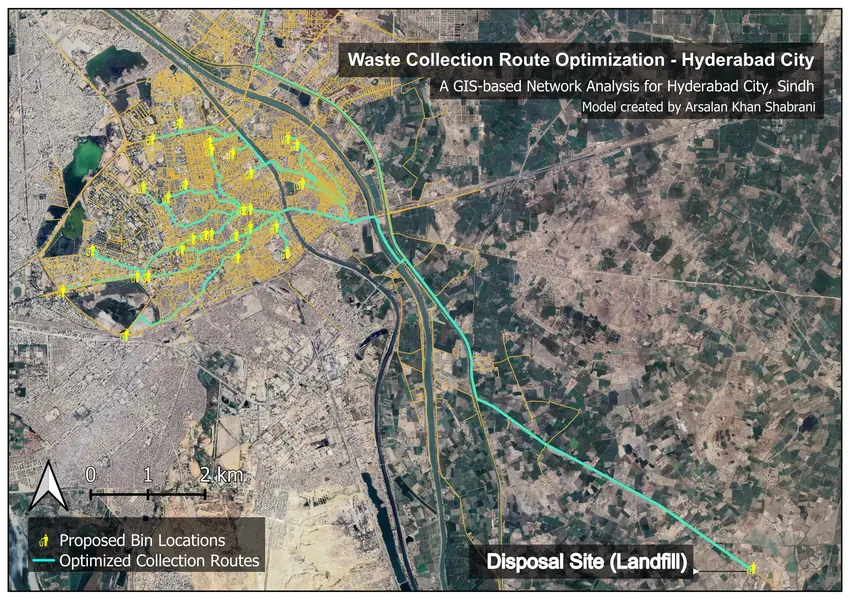
Municipal solid waste management in Hyderabad frequently suffers from inefficient collection routes, resulting in delayed container clearance, localized overflow, and excessive fuel expenditure. This project applied network routing analysis to create an optimized haul model connecting 30 designated municipal collection points across Qasimabad and Latifabad directly to a centralized landfill facility.
Two-month hands-on laboratory internship focused on physicochemical testing, spectrophotometry, wastewater treatment standards, and certified analytical QA/QC protocols.
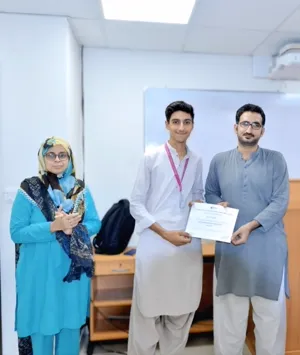
Awarded for the completion and technical presentation of a computational research mini project modeling water quality parameters, spatial trends, and statistical indices in Python.
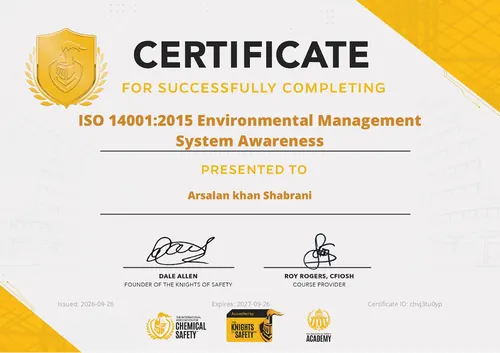
Accredited international certification in ISO 14001:2015 EMS framework, environmental risk evaluation, chemical safety governance, regulatory compliance, and ecological impact mitigation.
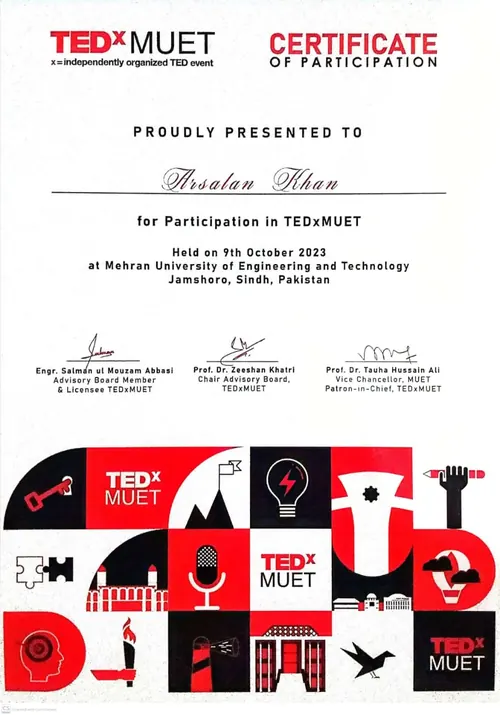
Official certificate of participation as youth delegate at Mehran UET's independently organized TED conference, engaging with climate resilience and sustainable innovation.
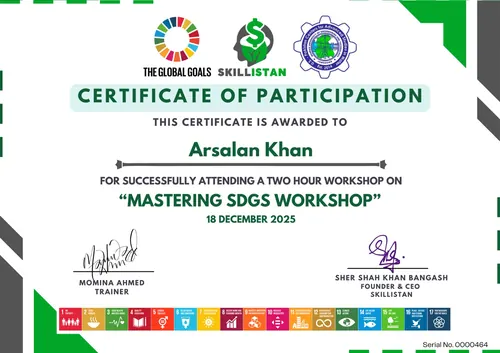
Interactive capacity-building training on the United Nations Sustainable Development Goals, indicator targets, and local environmental policy frameworks.
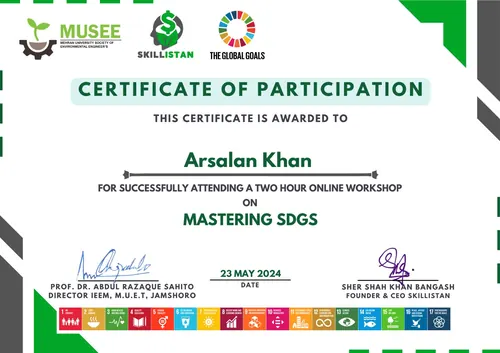
Technical training organized by the Mehran University Society of Environmental Engineers on SDG implementation in water and sanitary engineering.
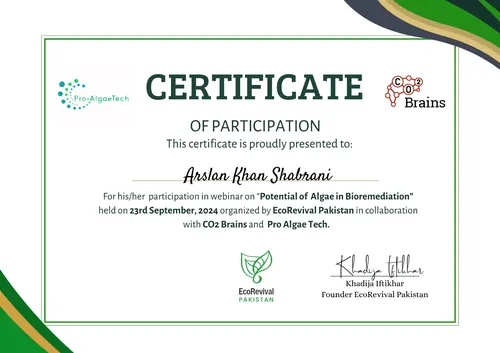
Technical webinar focusing on microalgal cultivation, biosorption of aquatic heavy metals, and biotechnological treatment of contaminated industrial wastewater streams.
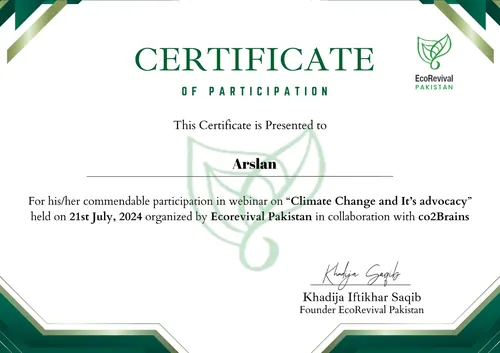
Training on evidence-based environmental communication, grassroots climate mobilization, and regional ecological resilience policy frameworks.
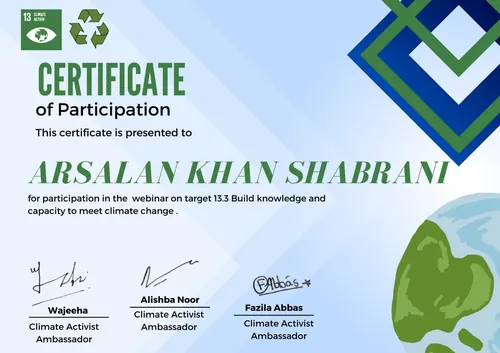
Seminar covering human and institutional capacity building on climate change mitigation, early warning systems, and national adaptation pathways.
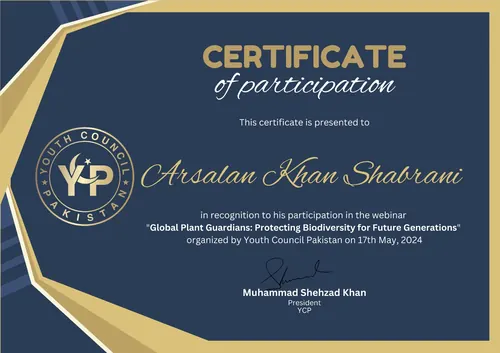
Environmental webinar addressing flora conservation, vegetative cover decline, habitat fragmentation, and biodiversity protection in arid ecosystems.
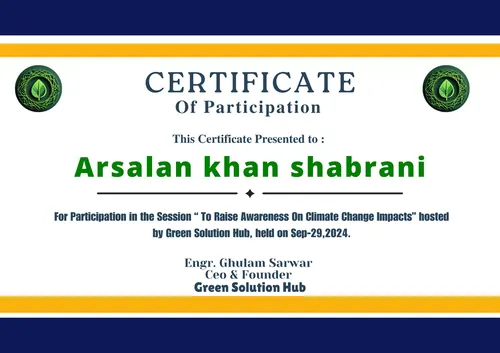
Participation in regional environmental awareness symposium discussing vulnerability assessments, extreme weather adaptation, and youth initiatives.
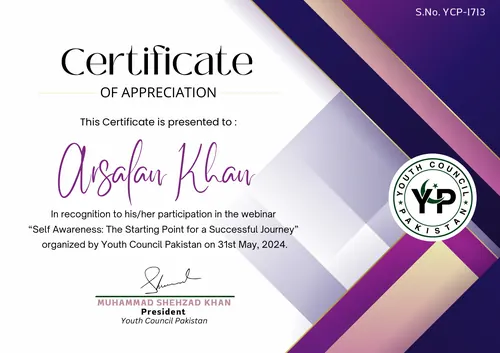
Professional development webinar examining emotional intelligence, goal setting, scientific career development, and leadership in civic spaces.